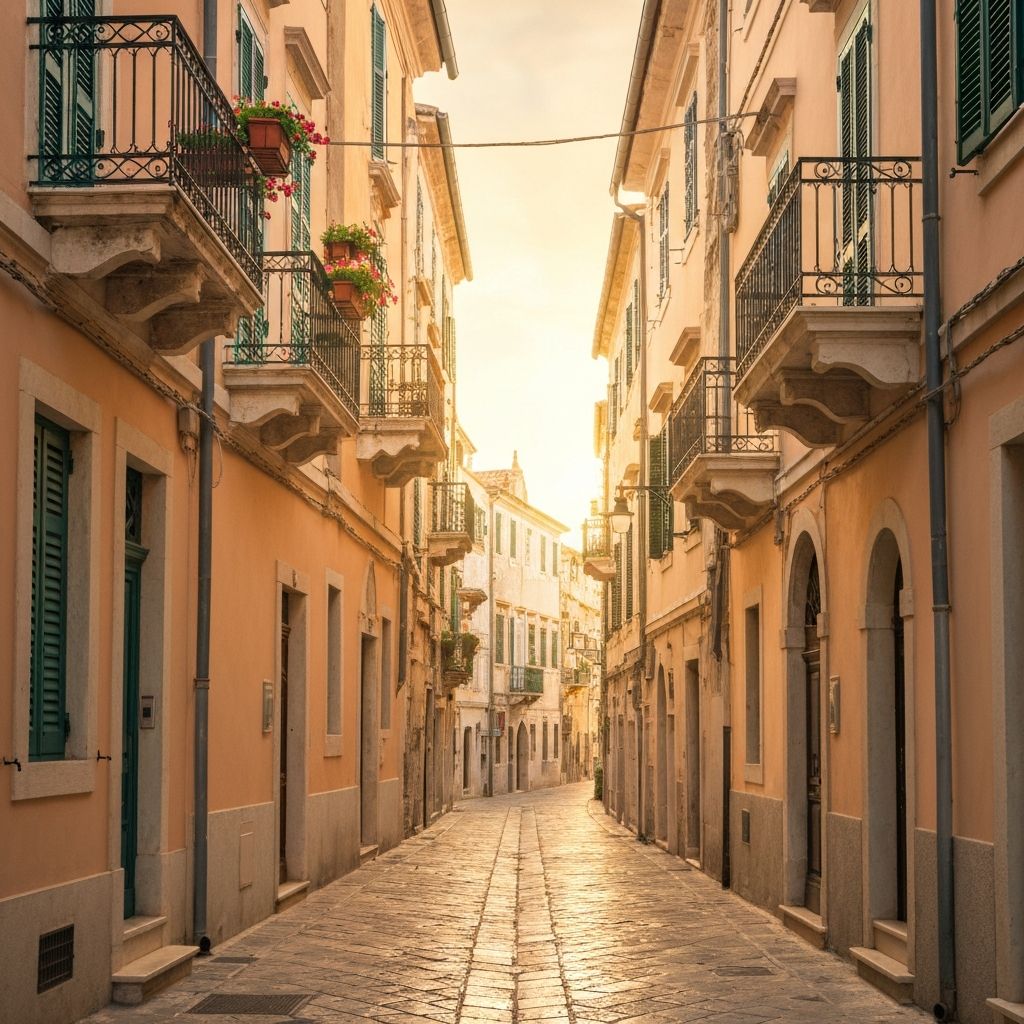
Walk through the narrow kantounia of Corfu Town and you'll find yourself transported to another era—one where Venetian aristocrats strolled beneath wrought-iron balconies, where Byzantine churches stood sentinel over cobblestone squares, and where the scent of kumquat and jasmine drifted through ancient alleyways.
A Living Museum
Corfu Town is not merely preserved; it breathes. The Liston arcade, modeled after Paris's Rue de Rivoli, remains the island's social heart, where locals gather for afternoon coffee beneath elegant arches built during the brief French occupation.
Beyond the main squares, the old town reveals itself in layers—Byzantine fortifications give way to Venetian palazzos, British-era monuments stand alongside Orthodox churches, and everywhere, the warm terracotta and faded ochre of centuries-old buildings create a palette that shifts with the Mediterranean light.
The Soul of the Ionian
This is where Corfu's cultural identity was forged—in the first university of modern Greece, in the oldest philharmonic society in the country, in the countless artistic and intellectual movements that flourished under the island's unique cosmopolitan influence.
Today, UNESCO protection ensures that development remains sensitive to this heritage. But Corfu Town is no museum piece. Artisan workshops still operate in hidden courtyards, traditional tavernas serve recipes passed down through generations, and the evening volta—the ritual promenade—continues as it has for centuries.
To understand Corfu, one must first lose oneself in the labyrinth of its old town, where every corner whispers of empire and elegance.
— Lawrence Durrell